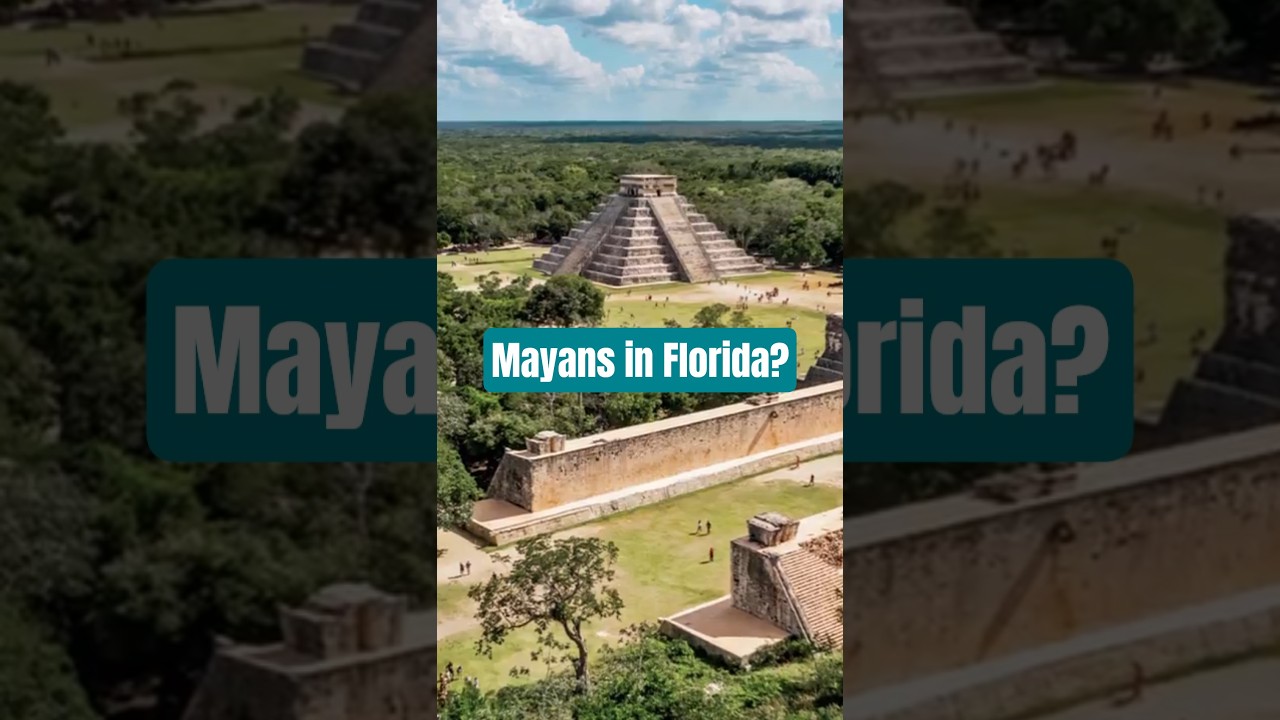
The archaeological mystery at Florida’s Crystal River complex revolves around a proposed, yet highly contested, link to the Maya civilization. Fringe theories point to several intriguing parallels: the presence of what researchers Pluckhahn, Thompson, and Rink describe as a unique stepped pyramid form (Mounds A and B at Roberts Island) and the appearance of a cross-in-circle motif on local pottery, which some fringe proponents interpret as the Mayan lamat glyph (representing Venus/Morning Star). These similarities suggest to a small minority that direct contact or influence from the Maya, hundreds of miles away in the Yucatán, may have occurred.
However, the scholarly consensus overwhelmingly dismisses any direct Maya connection. The core of the evidence refuting the fringe theories lies in the artifacts themselves: the pottery bearing the cross-in-circle design was definitively manufactured using local Florida resources, ruling out acquisition through Mesoamerican trade. Mainstream archaeologists interpret this motif as the widely shared cross-in-circle symbol common across ancient North American indigenous groups, particularly those connected by the Hopewell Interaction Sphere. This cultural network, which strongly influenced the builders of Crystal River, is the accepted explanation for the shared design, making independent cultural transmission within North America far more probable than a trans-Gulf voyage by the Maya.
#history #shorts #historyshorts #crystalriverflorida #archaeologylovers #mayacivilization #floridahistory #archaeologicalsite
7 comments
The archaeological mystery at Florida's Crystal River complex revolves around a proposed, yet highly contested, link to the Maya civilization. Fringe theories point to several intriguing parallels: the presence of what researchers Pluckhahn, Thompson, and Rink describe as a unique stepped pyramid form (Mounds A and B at Roberts Island) and the appearance of a cross-in-circle motif on local pottery, which some fringe proponents interpret as the Mayan lamat glyph (representing Venus/Morning Star). These similarities suggest to a small minority that direct contact or influence from the Maya, hundreds of miles away in the Yucatán, may have occurred.
However, the scholarly consensus overwhelmingly dismisses any direct Maya connection. The core of the evidence refuting the fringe theories lies in the artifacts themselves: the pottery bearing the cross-in-circle design was definitively manufactured using local Florida resources, ruling out acquisition through Mesoamerican trade. Mainstream archaeologists interpret this motif as the widely shared cross-in-circle symbol common across ancient North American indigenous groups, particularly those connected by the Hopewell Interaction Sphere. This cultural network, which strongly influenced the builders of Crystal River, is the accepted explanation for the shared design, making independent cultural transmission within North America far more probable than a trans-Gulf voyage by the Maya.
Gracias Senor por su trabajo!🙏👍🏼💯🇺🇸🇲🇽🌵🐍🦅
The Maya could have easily paddled across the gulf. Not saying they necessarily landed here but their influence would be just as easy to explain as the hopewell that mainly thrived along the Ohio river
The same people going around the globe
Not even close to the only known step pyramid, they are all over Florida. The mounds are older than the Mayan civilization, Mayan influence is clear in many mounds, it's not really fringe anymore. North Ga has confirmed it and many artifacts all over the southeast show Maya symbols, BUT are they Mayan or were the Mayan influenced by the Southeastern ceremonial complex? The Mayan civilization didn't form till around 2000BCE at the earliest ,most the mounds date back before that, that area has been dated to 3500 BCE.
Wouldn't there have been some evidence in Jamaica or Cuba as well?
When your whole world is sitting on an egg shell it’s most important to speak clearly and articulate lol
Comments are closed.