professional singer🎤 Real name: Kazue Kato Nickname: Ojō (young lady) Queen of music world Date of birth: May 29, 1937 Date of death: June 24, 1989 (died at age 52) Birthplace: Takigashira-2chome, Isogo-ku, Yokohama City, Kanagawa Prefecture, Japan Education: Graduated from Seika Gakuen High School (1956) Favorite color Purple
Motto
Tomorrow I will surpass the me of today.
Even if you were born without knowing this path How many years have passed since I walked this path? Let's cry today, but laugh again tomorrow.
Career Born to Uomasu, a fishmonger in Isogo Ward, Yokohama. Natural talent and the love of entertainment from her father, Masukichi, and mother, Kimie, led to her debut at the Yokohama Sugita Theater in 1945, at the age of nine. She appeared at the Yokohama International Theater in 1948, and at the Nichigeki and Dai Theaters in 1949, earning her a reputation as a talented young singer. That same year, she starred in the film "Sad Whistle," the theme song of which became a huge hit, leading to her signing exclusively to Columbia Records. She continued to enjoy success with hits like "Tokyo Kid," "The Lion's Song of Echigo," and "Ringo Oiwake," and in 1954, she starred in Shochiku's "The Izu Dancer," to great acclaim. That same year, she made her debut on NHK's "Kohaku Uta Gassen" (Red and White Song Battle). She continued to release hits like "It's the Wharf, Dad," "Minatomachi 13th Banchi," and "Hanagasa Dochu," building immense popularity through her dual talents in both singing and film.In 1960, he won the 2nd Record Award for Best Vocal Performance for "Aishu Hatoba," and in 1965, the 7th Record Award for "Yawa." In 1964, he made his first appearance at Shinjuku Koma Theater. In 1966, he released his signature song "Kanashii Sake," and in 1967, "Makka na Taiyo." On the other hand, in 1957, he was attacked by a fan who threw hydrochloric acid on him, and in the 1960s, he was criticized for being associated with the old ways of the entertainment industry, which led to him being banned from holding shows at public facilities across the country, and he was also rejected from the NHK Kohaku Uta Gassen in 1973. In April 1987, he was rushed to the Saiseikai Fukuoka General Hospital in Fukuoka City due to necrosis of the femoral heads in both legs and chronic liver disease, and it was said that he would never recover, but he miraculously recovered, and in April 1988 he successfully held the "Phoenix Concert" at the Tokyo Dome, which became a hot topic as a miraculous comeback.In the same year, she released the hit song "Like the Flow of a River." However, she was hospitalized again in February of the following year, 1989, and passed away in June. For 40 years, she remained active at the forefront of the entertainment world, in pop music, film, and stage, and was one of the most representative figures of postwar Japanese popular culture. She recorded 1,033 records and appeared in 157 films. Posthumously, she became the first woman to be awarded the People's Honor Award. In 2000, she was inducted into the Film Hall of Fame. In 2001, the Misora Hibari Memorial Hall, which exhibits 1,000 of her personal belongings, opened in Arashiyama, Kyoto (it closed in 2006).
Her books include "Song of the Rainbow," "Autobiography of Hibari," and "Like the Flow of a River."
Award People's Honor Award (1989) Japan Record Award Singing Award (2nd) (1960) for "Aishu Hatoba" Blue Ribbon Awards Popularity Award (12th, 1961), Japan Record Awards (7th, 1965) for "Juwa", Japan Record Awards Broadcasting Music Special Award (2nd, 1971), Japan Record Awards 15th Anniversary Commemorative Award (15th, 1973), Japan Record Awards Special Award (18th, 1976), Morita Tama Pioneer Award (6th, 1977), Japan Composer Award Music Culture Award (6th, 1986), Japan Record Awards Special Honor Award (20th, 1989), Japan Lyricist Award Special Award (22nd, 1989), Japan Record Awards Gold Prize (31st, 1989) for "Like the Flow of a River", Japan Academy Prize Chairman's Special Award (13th, 1990), Golden Arrow Award Special Achievement Award (27th) [1990], Japan Record Award Special Achievement Award (43rd) [2001]
6 comments
🇯🇵Hibari Misora💃
🎉💃👘🎤💐🌸🌹🐦🕊️💜🍎🎩
professional singer🎤
Real name: Kazue Kato
Nickname: Ojō (young lady)
Queen of music world
Date of birth: May 29, 1937
Date of death: June 24, 1989
(died at age 52)
Birthplace: Takigashira-2chome, Isogo-ku, Yokohama City, Kanagawa Prefecture, Japan
Education: Graduated from Seika Gakuen High School (1956)
Favorite color Purple
Motto
Tomorrow I will surpass the me of today.
Even if you were born without knowing this path
How many years have passed since I walked this path?
Let's cry today, but laugh again tomorrow.
Career
Born to Uomasu, a fishmonger in Isogo Ward, Yokohama. Natural talent and the love of entertainment from her father, Masukichi, and mother, Kimie, led to her debut at the Yokohama Sugita Theater in 1945, at the age of nine. She appeared at the Yokohama International Theater in 1948, and at the Nichigeki and Dai Theaters in 1949, earning her a reputation as a talented young singer. That same year, she starred in the film "Sad Whistle," the theme song of which became a huge hit, leading to her signing exclusively to Columbia Records. She continued to enjoy success with hits like "Tokyo Kid," "The Lion's Song of Echigo," and "Ringo Oiwake," and in 1954, she starred in Shochiku's "The Izu Dancer," to great acclaim. That same year, she made her debut on NHK's "Kohaku Uta Gassen" (Red and White Song Battle). She continued to release hits like "It's the Wharf, Dad," "Minatomachi 13th Banchi," and "Hanagasa Dochu," building immense popularity through her dual talents in both singing and film.In 1960, he won the 2nd Record Award for Best Vocal Performance for "Aishu Hatoba," and in 1965, the 7th Record Award for "Yawa." In 1964, he made his first appearance at Shinjuku Koma Theater. In 1966, he released his signature song "Kanashii Sake," and in 1967, "Makka na Taiyo." On the other hand, in 1957, he was attacked by a fan who threw hydrochloric acid on him, and in the 1960s, he was criticized for being associated with the old ways of the entertainment industry, which led to him being banned from holding shows at public facilities across the country, and he was also rejected from the NHK Kohaku Uta Gassen in 1973. In April 1987, he was rushed to the Saiseikai Fukuoka General Hospital in Fukuoka City due to necrosis of the femoral heads in both legs and chronic liver disease, and it was said that he would never recover, but he miraculously recovered, and in April 1988 he successfully held the "Phoenix Concert" at the Tokyo Dome, which became a hot topic as a miraculous comeback.In the same year, she released the hit song "Like the Flow of a River." However, she was hospitalized again in February of the following year, 1989, and passed away in June. For 40 years, she remained active at the forefront of the entertainment world, in pop music, film, and stage, and was one of the most representative figures of postwar Japanese popular culture. She recorded 1,033 records and appeared in 157 films. Posthumously, she became the first woman to be awarded the People's Honor Award. In 2000, she was inducted into the Film Hall of Fame. In 2001, the Misora Hibari Memorial Hall, which exhibits 1,000 of her personal belongings, opened in Arashiyama, Kyoto (it closed in 2006).
Her books include "Song of the Rainbow," "Autobiography of Hibari," and "Like the Flow of a River."
Award
People's Honor Award (1989) Japan Record Award Singing Award (2nd) (1960) for "Aishu Hatoba"
Blue Ribbon Awards Popularity Award (12th, 1961), Japan Record Awards (7th, 1965) for "Juwa", Japan Record Awards Broadcasting Music Special Award (2nd, 1971), Japan Record Awards 15th Anniversary Commemorative Award (15th, 1973), Japan Record Awards Special Award (18th, 1976), Morita Tama Pioneer Award (6th, 1977), Japan Composer Award Music Culture Award (6th, 1986), Japan Record Awards Special Honor Award (20th, 1989), Japan Lyricist Award Special Award (22nd, 1989), Japan Record Awards Gold Prize (31st, 1989) for "Like the Flow of a River", Japan Academy Prize Chairman's Special Award (13th, 1990), Golden Arrow Award Special Achievement Award (27th) [1990], Japan Record Award Special Achievement Award (43rd) [2001]
family
Masukichi Kato (father)
Kimie Kato (mother)
Setsuko Sato (younger sister)
Tetsuya Kato (eldest brother)
Takehiko Kayama (youngest brother)
Kazuya Kato (eldest son)
representative song
"Kanashiki Kuchibue" 1949
"Tokyo Kid" 1950
"Ringo Oiwake" 1952
"Miomatomachi Jyusanbanchi" 1957
"Yawara" 1964
"Kanashii Sake" 1966
"Omaeni Horeta" 1980
"Ai Sansan" 1986
"Midare Gami" 1987
"Kawano Nagareno Youni" 1989
芸名 美空 ひばり(みそら ひばり)
職業 歌手 女優 実業家
本名 加藤和枝(かとうかずえ)
愛称 お嬢(おじょう)
通称 歌謡界の女王
生年月日 昭和12年(1937年)5月29日
没年月日 平成元年(1989年)6月24日(52歳没)
出生地 神奈川県横浜市磯子区滝頭ニ丁目
学歴 横浜市立滝頭小学校卒
精華学園女子中学校卒
精華学園女子高等学校卒
好きな色 紫
座右の銘
今日の我に 明日は勝つ
生まれし時に この道知らずとも
この道を歩み 幾年月ぞ
今日涙して 明日又笑おうぞ
経歴
生家は横浜市磯子区の魚屋・魚増。天性の才能と父・増吉、母・喜美枝の“芸能好き”によって、昭和20年に9歳で横浜杉田劇場でデビュー。昭和23年横浜国際劇場、24年日劇と大劇場への出演を果たし、天才少女歌手と評される。同年映画「悲しき口笛」に主演、同名の主題歌が大ヒットしてコロムビアレコード専属となる。以来「東京キッド」「越後獅子の唄」「リンゴ追分」など大ヒットがつづき、昭和29年松竹「伊豆の踊子」に主演、大好評を得る。同年NHK「紅白歌合戦」に初出場。その後も「波止場だよお父つぁん」「港町十三番地」「花笠道中」などヒット曲を出し、“歌に映画に”といった二本立形式で絶大な人気を築いた。昭和35年「哀愁波止場」で第2回レコード大賞歌唱賞、昭和40年「柔」で第7回レコード大賞を受賞、昭和39年新宿コマ劇場初出演。昭和41年代表曲「悲しい酒」、昭和42年「真赤な太陽」を発表。一方で昭和32年にはファンから塩酸をかけられる事件があり、昭和40年代には興行界の古い体質との結びつきが批判されて全国の公共施設からショーの開催を締め出され、昭和48年のNHK紅白の落選にもつながった。昭和62年4月左右大腿骨頭壊死と慢性肝臓病のため、福岡市の済生会福岡総合病院に緊急入院、再起不能とまでいわれたが、奇跡的に回復し、昭和63年4月東京ドームで“不死鳥コンサート”を成功させ、奇跡のカムバックと話題になった。同年名曲「川の流れのように」を発表。しかし翌平成元年2月に再び入院、6月死去した。40年間にわたり、歌謡曲、映画、舞台と芸能界の第一線で活動を続け、戦後日本の大衆文化を代表する一人だった。吹き込んだレコードは1033曲、映画出演は157作品を数えた。死後、女性初の国民栄誉賞が贈られた。平成2年映画殿堂入り。平成6年京都嵐山に遺品など1000点を展示したメモリアルホール美空ひばり館が開館した(平成18年閉館)。
著書に「虹の唄」「ひばり自伝」「川の流れのように」がある。
受賞
国民栄誉賞〔平成元年〕
日本レコード大賞歌唱賞(第2回)〔昭和35年〕「哀愁波止場」,ブルーリボン賞大衆賞(第12回 昭和36年度),日本レコード大賞(第7回)〔昭和40年〕「柔」,日本歌謡大賞放送音楽特別賞(第2回)〔昭和46年〕,日本レコード大賞制定15周年記念賞(第15回)〔昭和48年〕,日本レコード大賞特別賞(第18回)〔昭和51年〕,森田たまパイオニア賞(第6回)〔昭和52年〕,日本作曲大賞音楽文化賞(第6回)〔昭和61年〕,日本歌謡大賞特別栄誉賞(第20回)〔平成元年〕,日本作詩大賞特別賞(第22回)〔平成1年〕,日本レコード大賞金賞(第31回)〔平成1年〕「川の流れのように」,日本アカデミー賞会長特別賞(第13回)〔平成2年〕,ゴールデン・アロー賞特別功労賞(第27回)〔平成2年〕,日本レコード大賞特別功労賞(第43回)〔平成13年〕
家族
加藤増吉(父)
加藤喜美枝(母)
佐藤勢津子(妹)
かとう哲也(長弟)
香山武彦(末弟)
加藤和也(長男)
代表曲
「悲しき口笛」1949年
「東京キッド」1950年
「リンゴ追分」1952年
「港町十三番地」1957年
「柔」1964年
「悲しい酒」1966年
「おまえに惚れた」1980年
「愛燦燦(あいさんさん)」1986年
「みだれ髪」 1987年
「川の流れのように」1989年
美空ひばり ヒストリー その43
ブルーリボン賞は、1961年度の第12回でひばりに大衆賞を授与した。「映画主演で13年間大衆に愛され親しまれて来た功績」と信念が貫かれたことが認められての授与理由で、ひばりが喜んだことは言うまでもない。
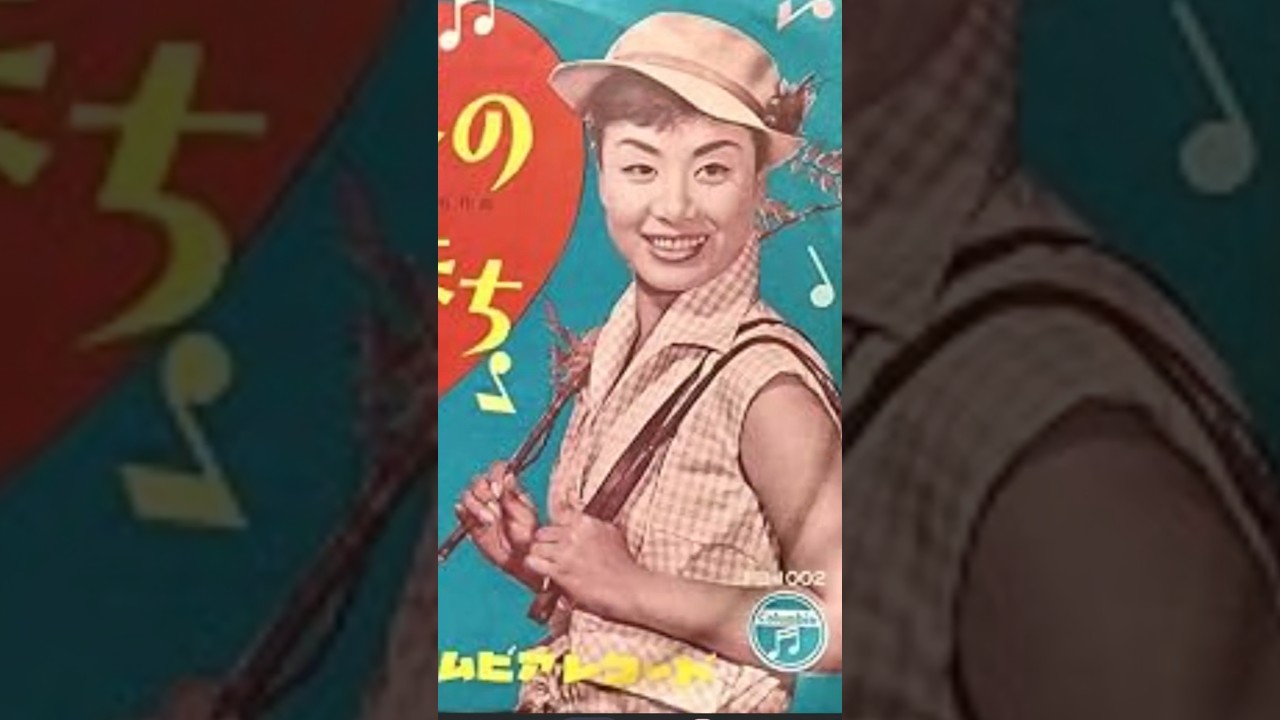
美空ひばり芸能生活10年記念レコード
青春の恋人たち
美空ひばり(20歳)
1957年9月1日(昭和32年)
作詞 西沢爽
作曲 古賀政男
口笛ふいたら 小窓があいた
あの娘のサインは えくぼのサイン
ユラ ユラ 陽ざしの
街へ一緒に 行かないか
ああ ふたりは
いつでも いつでも青い空
若さがかがやく 恋人たちさ
ならんで歩けば 夢見るように
うっとりゆれてる 真昼のそよ風
ホラ ホラ この夢
知っているのは あなただけ
ああ ふたりは
いつでも いつでも若い鳥
緑の梢の 恋人たちさ
涙が可愛い あの娘のまつげ
いじわるしたって 愛しているさ
ソラ ソラ 明日は
山であの雲 呼ぶんだろ
ああ ふたりは
いつでも いつでも光る風
未来へ旅行く 恋人たちさ
懐かしい歌声聞くの何十年ぶりだろう‼️十代の歌声ですね!声が明るいですね!❤❤❤❤❤
ひばりちゃんの、若き日の、歌ですね、
Comments are closed.